Surron Light Bee 2 Buying Guide: Battery Health & Key Inspections
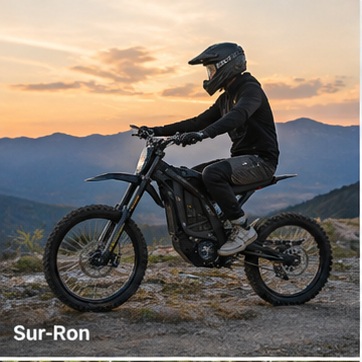
A used Surron Light Bee 2 can be a strong value when its battery, chassis and charging equipment are documented properly. This guide focuses on inspection evidence rather than sales language: what to measure, where to look for wear, and which questions should be answered before money changes hands.
Start by checking the bike against Surron's official Light Bee 2 specifications, then use the manufacturer owner's manual for pre-ride and battery safety procedures. If you want a benchmark after doing that research, the current Surron listing shows how we disclose condition and battery health.
Why Buyers Consider a Used Light Bee 2
Three reasons come up over and over.
Depreciation. Like most powersports equipment, electric dirt bikes lose the largest share of their value early. A lightly used bike delivers effectively the same performance for meaningfully less money.
The platform. The Light Bee family is the reference point for lightweight electric off-road riding in the USA. Riders know it, shops have seen it, and parts and accessories are widely available. The 2026 Light Bee 2 steps the platform up substantially with a 24 kW peak PMSM motor, a 78.54V 45Ah (3.53 kWh) pack and 410 Nm of wheel torque, while staying at 65 kg (~143 lbs).
Simplicity. No oil changes, no carburetor, no spark plugs, no air filter. Maintenance is mostly chain, brakes, tires, suspension and battery care.
The catch is that the battery is the expensive part, and it is the one component you cannot judge by looking at it.
Check the Battery Health
Start here. Not with the paint, not with the tires — the pack.
Ask the seller for a measured capacity figure and how it was obtained. A dashboard state-of-charge reading is not battery health; it tells you how full the pack is, not how much it can hold. A real assessment covers:
- Usable capacity measured against the rated 45Ah / 3.53 kWh.
- Internal resistance, which rises as cells age and causes voltage sag under load.
- Cell-group balance, because one weak group limits the entire pack regardless of how healthy the rest is.
Also ask how the bike was stored. Packs left at 100% or fully flat for months degrade faster than packs stored part-charged in a stable temperature. Frequent high-rate fast charging accelerates wear too.
What 98% Battery Health Means
98% means the pack measured roughly 98% of its rated usable capacity. On a 3.53 kWh battery that is close to as-new, and it is the strongest signal available that the bike has had a short, careful life: limited cycles, sensible storage, no repeated deep discharges or heat soaking.
Practically it means you should see performance and range in line with a new bike's behaviour, and it means the most expensive part of the machine is not a near-term replacement cost.
For comparison: above roughly 90% is strong, 80–90% is usable but should be priced accordingly, and below 80% you are effectively buying a bike plus a future pack.
Check the Frame and Chassis
The Light Bee 2 uses a forged aluminum alloy frame. Aluminum does not bend and spring back the way steel can — it cracks. Inspect:
- The swingarm pivot area and the welds around it.
- The motor mounts and any bracketry carrying drivetrain load.
- The headstock for stress lines or paint crazing, which often signals an impact.
- Evidence of weld repairs, which on a load-bearing aluminum frame is a walk-away for most buyers.
Check that the wheels sit in line with each other. A bike that tracks slightly sideways usually has a bent component somewhere.
Inspect Suspension and Brakes
Compress the fork through its full travel. It should move smoothly, with no notching and no oil weeping down the stanchions. Fork seals are cheap; a fork that has been ridden hard with blown seals may have scored bushings, which is not cheap.
Check the shock the same way — full stroke, no leaks, no clunks at the mount. Grab the rear wheel and rock it to feel for play in the linkage or swingarm bearings.
Brakes are simple: pull each lever and feel for a firm bite rather than a spongy pull to the bar. Look at pad depth and check the rotors for deep scoring or blueing. Also test the regenerative braking function, since on this platform it does part of the stopping work.
Check Tires and Drivetrain
Tires are consumables, but they tell you how the bike was ridden. Squared-off centre knobs usually mean a lot of hard surface use; torn side knobs mean aggressive off-road riding.
For the drivetrain, the Light Bee 2 runs a 520-90 O-ring chain with a primary gear transmission plus secondary chain drive. Check:
- Chain stretch — pull the chain away from the rear sprocket; excessive lift means it is worn.
- Sprocket teeth for hooking or sharpening.
- Chain tension and alignment, and whether the O-rings look dried out and neglected.
A worn chain and sprockets are an inexpensive fix, but a neglected drivetrain is a good indicator of how the rest of the bike was treated.
Verify the Charger and Electrical Components
Confirm the original charger is included and that it actually charges the bike — not just that it powers on. A replacement charger is an avoidable cost and a common thing sellers "forget" to mention.
Then inspect the electrical side:
- Wiring looms for chafing, tape repairs or splices that were not done at the factory.
- The controller for heat discolouration or corrosion.
- Connectors for melted housings, which indicate sustained high-current stress.
- Water intrusion signs around the pack bay and controller area.
Cycle through the power modes (E / D / S / M / T / R / L) and confirm each engages. Test traction control, cruise control and wheelie control if the seller can demonstrate them. Electronics that do not respond can mean a sensor fault or a modified setup.
Review the Specifications
Know what the bike is supposed to be before you evaluate the one in front of you.
| Spec | 2026 Surron Light Bee 2 |
|---|---|
| Motor | 24 kW peak PMSM |
| Battery | 78.54V / 45Ah (3.53 kWh, removable) |
| Wheel torque | 410 Nm |
| Top speed | 90 km/h (~55.9 mph, manufacturer test) |
| Acceleration | 0–50 km/h ~1.8 s · 0–80 km/h ~3.43 s (manufacturer test) |
| Range | Up to 160 km @ 25 km/h · 108 km @ 40 km/h (manufacturer test) |
| Curb weight | 65 kg (~143 lbs) |
| Frame | Forged aluminum alloy |
| Chain | 520-90 O-ring |
| Modes | E / D / S / M / T / R / L |
Speed, acceleration and range are manufacturer test-condition figures, not guaranteed real-world results. Use them to compare bikes, not to plan a ride.
Note also that this is an off-road and closed-course machine. We do not list it as street legal, and road-use rules vary by state and by the equipment fitted to the individual bike.
How Much Is a Used Surron Light Bee 2?
Used pricing varies widely with condition, hours, battery health, included extras and region, so there is no single correct number.
What we can tell you is our own listing: the 2026 Surron Light Bee 2 we have available is $3,600 with 98% measured battery health, inspected and ready to ship nationwide.
When comparing against cheaper listings elsewhere, ask what battery health figure comes with them. A $600 saving on a bike with an unverified pack is not a saving. You can see how the Light Bee 2 sits against the rest of our range on the inventory page, the shop, or the electric dirt bike landing page.
View the Available 2026 Surron Light Bee 2
Full photos, complete specifications, live availability and the payment calculator are on the 2026 Surron Light Bee 2 product page.
From that page you can reserve the bike, place an order through our standard checkout, estimate installments using our financing structure, or reach us directly on WhatsApp or by phone. If you want condition details or shipping timing confirmed for your address first, contact us and we will get back to you.
Frequently Asked Questions
Is a used Surron Light Bee 2 a good buy?
It can be an excellent buy when the battery has been properly tested. Electric dirt bikes lose a large share of their value early, so a lightly used unit with verified pack health gives you nearly new performance for meaningfully less money. An untested pack is where used buyers get hurt.
How do I check battery health on a Light Bee 2?
Ask for a measured capacity test rather than a dashboard reading. A proper check covers usable capacity against the rated 45Ah, internal resistance, and cell-group balance. A bike that shows full charge on the display can still have one weak cell group limiting the whole pack.
What battery health percentage is acceptable?
Above roughly 90% is strong for a used pack. Between 80% and 90% is usable but should be reflected in the price. Below 80% you are buying a future pack replacement, which on a 3.53 kWh battery is a significant cost. The unit we list measured 98%.
How many hours is too many on a used Light Bee 2?
Hours matter less than how the bike was used and stored. A high-hour trail bike that was charged sensibly and serviced can be healthier than a low-hour bike left flat in a cold garage for a year. Use hours as context, and battery health plus a physical inspection as the decision.
What does the used Surron Light Bee 2 you have cost?
Our listed 2026 Surron Light Bee 2 is $3,600 with 98% measured battery health. That is our price for this specific unit in this condition, not a market-wide figure.
What commonly needs replacing on a used Light Bee?
Consumables first: tires, brake pads, chain and sprockets. Fork seals and grips follow. These are inexpensive relative to the bike and are normal wear items, but factor them into your offer if they are worn.
Should I buy used or new?
Used makes sense for most riders because the steepest depreciation happens early. Buying new mainly makes sense if you want a factory warranty and the exact latest configuration. A certified used bike with a tested pack is the middle ground most of our customers choose.
Can I get a used Light Bee 2 on payments?
Yes. Our [financing page](/financing) explains the 30% down payment structure and installment tiers, and the payment calculator on the product page estimates monthly figures directly from the listed price.